
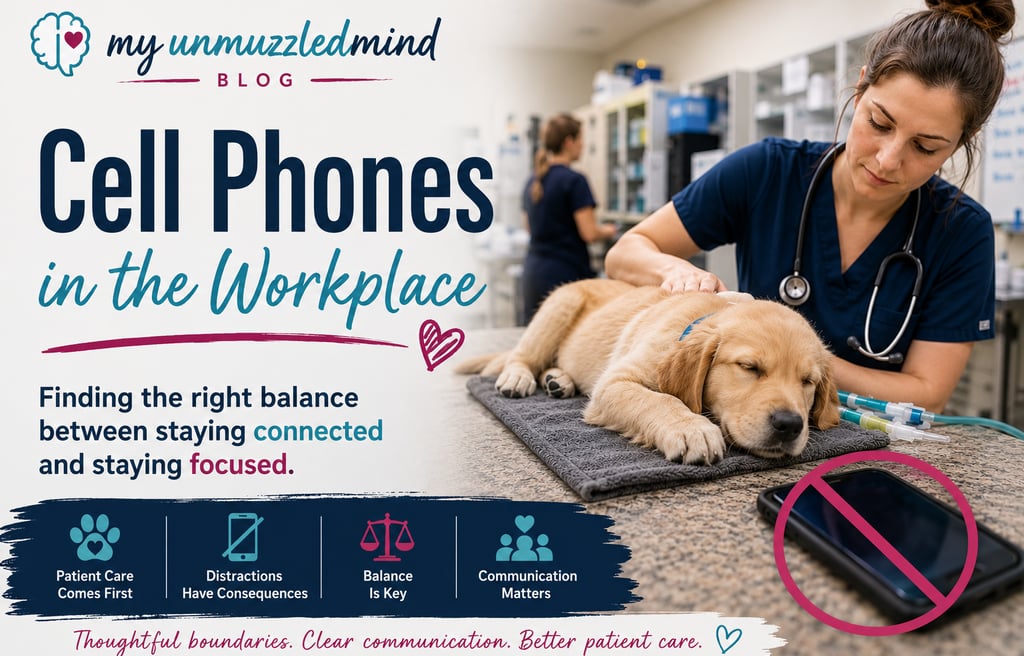
Cell Phones in the Workplace: Helpful Tool or Dangerous Distraction?
One notification can wait. Patient care can't.
Let's be honest—we're all a little addicted to our cell phones.
Technology keeps us connected, informed, entertained, and productive. It helps us communicate with friends and family, manage our schedules, and even answer questions in seconds. But while technology can make our lives easier, it can also create distractions that have serious consequences in the workplace—especially in veterinary medicine.
Patient care requires our full attention.
A quick glance at a text message may seem harmless, but distractions can lead to medication errors, missed details, treatment mistakes, or lapses in patient monitoring. Cell phones should never be used while performing treatments, counting medications, monitoring anesthesia, assisting in surgery, or handling patients. The risks are simply too great.
This doesn't mean cell phones should be banned entirely. Life happens. Employees may have children, family emergencies, medical concerns, or other important matters that require occasional access to their phones. The key is creating reasonable expectations and clear boundaries.
Consider establishing guidelines such as:
Checking phones during designated breaks
Using phones only after patient care responsibilities have been completed
Informing management when expecting an important call or message
Keeping phones out of treatment, surgery, and patient care areas
The most successful policies aren't created through punishment—they're created through education and discussion. Team members are more likely to support expectations when they understand the "why" behind them.
As leaders, it's important that these behaviors are modeled from the top down. If we expect our teams to remain focused on patient care, management and leadership must demonstrate the same commitment.
Cell phones are powerful tools. They can help us stay connected and informed. But when used at the wrong time, they can also distract us from what matters most: providing safe, high-quality care to our patients.
The conversation shouldn't be about taking phones away. It should be about finding the right balance between staying connected and staying focused.
- Jenna Adera RVT.
Practical tips, honest insights, and gentle support for veterinary professionals navigating the realities of clinic life.
Lets Connect
info@myunmuzzledmind.com
(818) 495-5176
© 2025. All rights reserved.
Follow me